 +91 859 116 7727
  connect@affluence.net.in
The Great De-cluttering: How RBI is Trimming the NBFC Registry in 2026
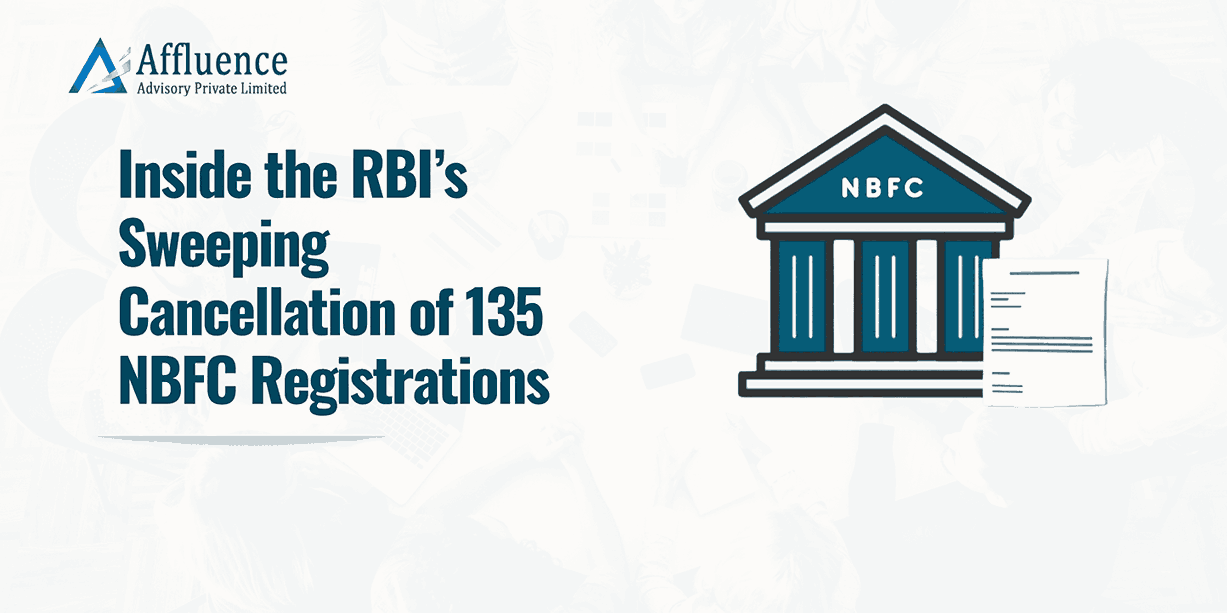
On April 29, 2026, the Reserve Bank of India (RBI) issued the Amendment Directions, 2026, introducing a simplified framework for specific Non-Banking Financial Companies (NBFCs). By allowing eligible entities to deregister, the RBI is significantly reducing the compliance burden for firms that pose minimal systemic risk.
New Classifications: Defining the “Silent” NBFC
The amendment refines how NBFCs are categorised based on their interaction with public money and consumers:
- Type I NBFC: Registered entities with no public funds and no customer interface.
- Type II NBFC: All other registered NBFCs (those with public funds or customer interaction).
- Unregistered Type I NBFC: A new category for entities exempted from registration under the 2026 guidelines.
Eligibility for Deregistration
Under the new rules, an NBFC can apply for an exemption from Sections 45IA and 45IC of the RBI Act, 1934 if it meets three criteria:
- No Public Funds: It does not (and will not) accept public funds, including indirect receipts through group entities.
- No Customer Interface: It does not (and will not) interact directly with customers.
- Asset Size: Its asset size (or the aggregate size of all such entities within a Group) is less than ₹1,000 crore.
Eligible entities must apply for deregistration through the PRAVAAH portal by December 31, 2026. The application requires:
- The original Certificate of Registration (CoR).
- Audited financials for the last three years.
- A Statutory Auditor’s Certificate (SAC) confirming the absence of public funds and customer interface.
- A Board Resolution committing to maintain these “Type I” characteristics and to re-register if asset size exceeds the ₹1,000 crore limit.
Life as an “Unregistered Type I NBFC”
Deregistration does not mean a total exit from oversight. These entities must remain vigilant to maintain their exempt status:
- Annual Affirmation: Boards must pass a resolution at the start of every financial year affirming they still meet the “no public funds/no customer interface” criteria.
- Transparency: Status as an “Unregistered Type I NBFC” must be clearly disclosed in the “Notes to Accounts.”
- The Growth Trigger: If the asset size reaches ₹1,000 crore, the entity must immediately reapply for registration.
The RBI has included safeguards to prevent regulatory arbitrage.
Important: Any Unregistered Type I NBFC wishing to make overseas investments in the financial services sector must remain registered and regulated. Furthermore, these entities are strictly prohibited from making overseas investments in non-financial sectors.
The 2026 Amendment Directions represent a shift toward “right-sized” regulation. By exempting small, private-pool investment vehicles from heavy periodic filings, the RBI is promoting ease of doing business for captive finance arms while keeping a close watch on the larger, more interconnected players. For eligible firms, the window to simplify their regulatory footprint is open
CLICK HERE DOWNLOAD PDF